
Introduction
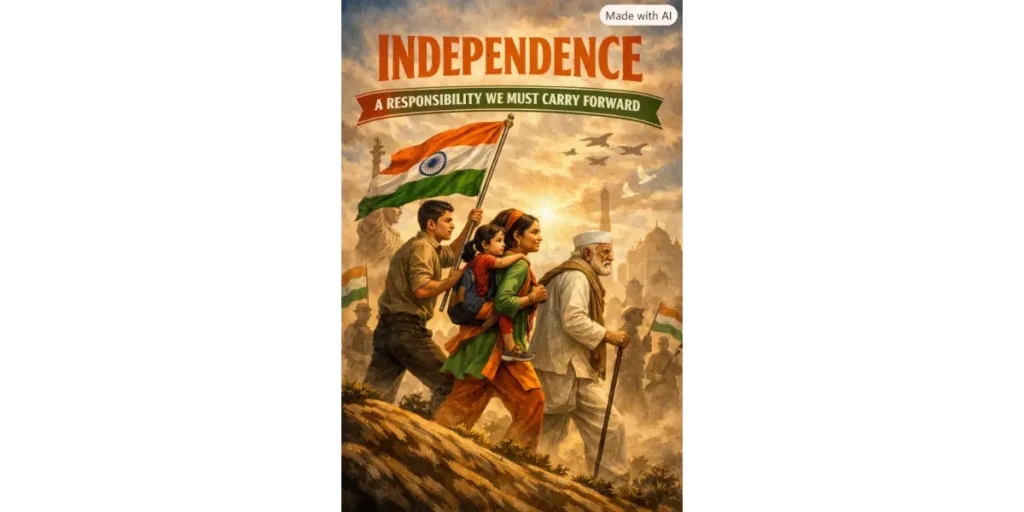
Independence is more than freedom from foreign rule. It is the freedom to think, speak, learn, work, dream and build our future as citizens of a nation. For India, independence carries a history of immense sacrifice, courage and determination. Every year, Independence Day reminds us not only of how India became free, but also of the responsibility that comes with that freedom.
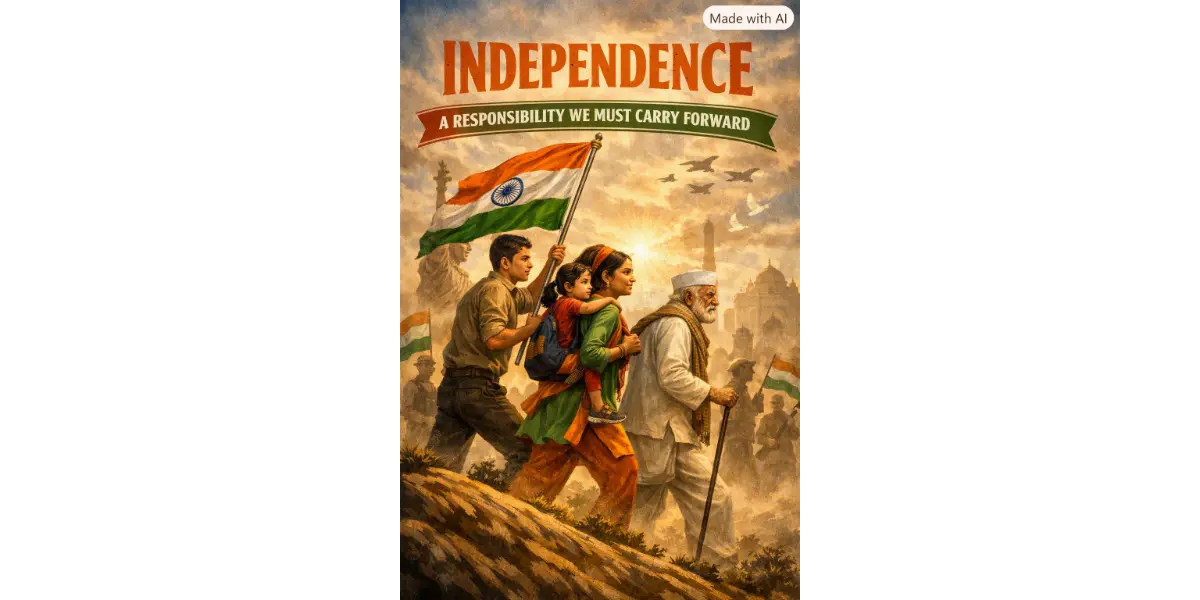
India celebrates Independence Day on 15 August to commemorate the country’s independence from British rule in 1947. But behind that historic day were decades of struggle, sacrifice and extraordinary courage by people from different regions, communities and backgrounds.
The Freedom We Inherited Was Built on Sacrifice
India’s freedom movement was not the achievement of one person or one group. Millions of Indians participated in the struggle in different ways.
Leaders such as Mahatma Gandhi, Subhas Chandra Bose, Sardar Vallabhbhai Patel, Jawaharlal Nehru, Bhagat Singh, Chandrashekhar Azad, Bal Gangadhar Tilak, Sarojini Naidu and many others played important roles at different stages of the freedom movement.
Alongside these well-known leaders were countless ordinary citizens whose names may never appear in history books. Farmers, workers, students, women, soldiers, writers and social reformers contributed to the movement. Many faced imprisonment, violence, economic hardship and even death.
The sacrifices of revolutionaries such as Bhagat Singh and Chandrashekhar Azad demonstrated extraordinary courage. Mahatma Gandhi’s philosophy of non-violence and civil disobedience mobilised millions of people. Subhas Chandra Bose inspired Indians with his call for complete freedom and his leadership of the Indian National Army.
Women also played a significant role. Leaders such as Rani Lakshmibai, Sarojini Naidu, Aruna Asaf Ali, Kasturba Gandhi and countless other women challenged colonial rule and contributed to India’s freedom struggle.
The India we live in today was built through the sacrifices of generations.
What Does Independence Mean to Us Today?
Independence gives citizens the ability to participate in shaping their country. It gives us rights, opportunities and the freedom to express ourselves.
But freedom does not mean that we can do whatever we want without considering others.
True independence comes with responsibility.
Our freedom should be used to:
- Educate ourselves and others.
- Respect different opinions and backgrounds.
- Stand against injustice and discrimination.
- Follow the law and respect the rights of others.
- Protect public property and our environment.
- Participate responsibly in democracy.
- Use technology and social media responsibly.
- Help people who are less fortunate.
- Encourage unity rather than hatred and division.
- Contribute honestly to the development of our country.
The greatest way to honour our freedom fighters is not simply by remembering them once a year. It is by building the kind of country they sacrificed for.
The Constitution: The Foundation of Our Freedom
India’s independence gave us freedom from colonial rule, while the Constitution of India gave the newly independent nation a framework for democracy, justice, liberty and equality.
The Constitution protects fundamental rights and establishes the principles through which the country is governed. It also reminds us that democracy is not merely about elections. It is about respecting institutions, laws, rights and the dignity of every citizen.
Protecting the integrity of the Constitution is therefore a responsibility shared by everyone.
We should understand our constitutional rights, but we should also understand our constitutional duties. Freedom of speech, for example, carries a responsibility to use that freedom without deliberately spreading hatred, misinformation or violence.
Similarly, equality means that every citizen deserves dignity and fairness, regardless of their background.
Protecting India’s Unity and Integrity
India is one of the world’s most diverse nations. We speak different languages, follow different traditions and celebrate different festivals. Our diversity is not a weakness; it is one of our greatest strengths.
Protecting India’s integrity means protecting the idea that people with different identities can live together as equal citizens of one nation.
We should therefore be careful about anything that deliberately creates hatred between communities. Social media has given everyone a powerful voice, but that power must be used responsibly. Before sharing information, we should ask whether it is true, whether it is useful and whether it could unnecessarily harm someone or create division.
Patriotism should not be measured by how loudly we speak about our country. It should be measured by how responsibly we contribute to it.
How Can We Use Our Independence?
Independence gives us the opportunity to become better citizens and build a better society.
A student can use freedom to pursue education and knowledge.
A professional can use freedom to work honestly and create value.
An entrepreneur can create employment and innovation.
A citizen can vote responsibly and participate in democracy.
A young person can use technology to learn rather than spread misinformation.
Every individual can help create a society based on respect, equality and compassion.
Nation-building does not always require extraordinary actions. Sometimes it begins with ordinary things: obeying traffic rules, paying taxes honestly, keeping public places clean, respecting women and children, helping someone in need, protecting the environment and refusing to participate in corruption or discrimination.
Independence Is a Continuing Responsibility
The freedom fighters fought to give future generations the opportunity to determine their own destiny. That opportunity is now ours.
Our responsibility is to ensure that freedom remains meaningful for the generations that come after us.
We must protect democratic values, respect the Constitution, preserve India’s unity and encourage young people to become educated, responsible and compassionate citizens.
As India moves toward its future, development should not be measured only by economic growth or technological progress. A truly developed India must also be a country where citizens have dignity, justice, opportunity and freedom.
Conclusion
Independence Day is not simply a national celebration. It is a moment of reflection.
We remember those who sacrificed their lives for India’s freedom. We honour the principles that shaped our democracy. And we ask ourselves what we are doing with the freedom that was given to us.
The freedom fighters gave us an independent India. It is our responsibility to protect its democracy, uphold the Constitution, preserve its unity and build a better future.
Let us celebrate independence not only with flags and ceremonies, but through responsible citizenship, unity, integrity and meaningful contribution to our nation.
Jai Hind!


